Listen to the article
Reducing Clicks Between “Book a Viewing” and an Actual Viewing
One Page for Every Viewing Link: Simplifying How Prospective Residents Request Viewings
When someone clicks “Book a viewing” on a property website, their intent is usually very clear.
They want to:
-
visit the building
-
see the rooms
-
walk the location
-
or arrange a virtual tour
They are not trying to book accommodation.
They’re trying to arrange a viewing.
Yet on many multi-location property websites, that simple intent gets diluted by navigation.
The navigation problem hiding in plain sight
From a global navigation perspective, the call to action is obvious:
Book a viewing
The problem is deciding where that link should go.
If it links to:
-
a specific property page, it may not match what the user wants
-
a locations index, the user has to browse before they can request a viewing
-
a single calendar link, it only works for one site or one type of viewing
As more locations and viewing options are added, the navigation becomes harder to reason about.
The result is friction at exactly the moment a prospective resident is ready to act.
Why extra clicks reduce viewing requests
Every additional step before a calendar appears creates hesitation.
THE PROBLEM: 5 CLICKS BEFORE A CALENDAR
➤ Click "Book a viewing"
➤ Choose a location
➤ Navigate to location page
➤ Find the viewing section
➤ Select virtual or in-person
= Friction at the moment of intent
…you’re asking them to make multiple decisions before they ever see availability.
None of those steps are wrong. They’re just unnecessary when the intent is already clear.
A simple shift: treat viewing requests as their own journey
Instead of forcing viewing requests to sit inside location pages, we treated them as a first-class experience.
-
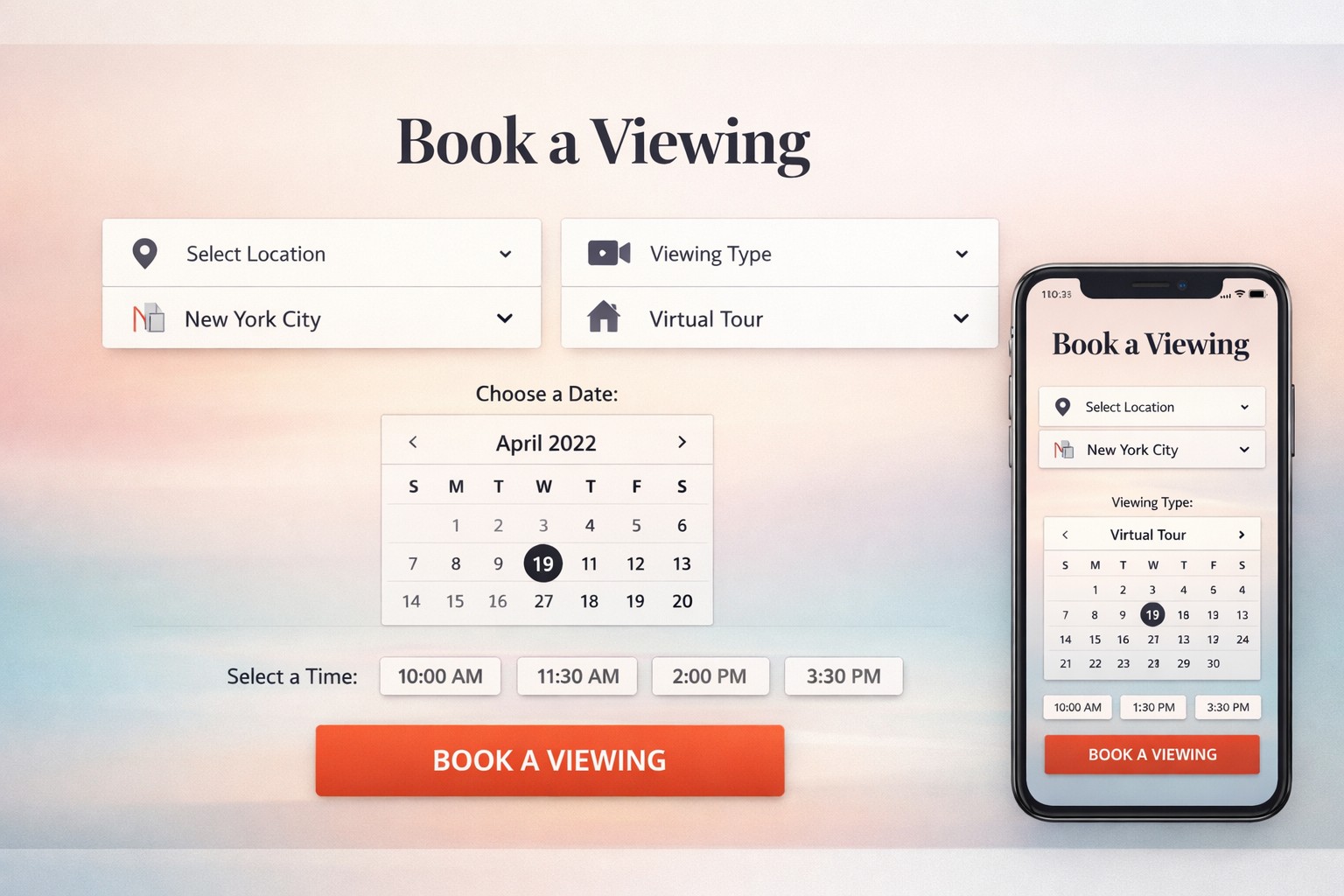
global navigation links to one central “Book a viewing” page
- that page allows the user to select:
-
the location they want to view
-
the type of viewing (virtual or in-person)
-
-
the relevant viewing calendar loads immediately
The user doesn’t need to browse locations first.
They don’t need to understand how the site is structured.
They arrive with intent and are taken straight to arranging a viewing.
Result: Straight path from intent to booking journey
The Solution Flow
From Intent to Booking
Result: Straight path from intent to booking. Zero unnecessary friction.
Still supporting location-specific pages
This doesn’t replace site or location pages.
If someone is already browsing a specific property page, it still makes sense to:
-
link directly to that location’s viewing option
-
pre-select the relevant site where appropriate
The key difference is this:
Global navigation no longer forces users to choose a location before they can request a viewing.
That choice happens within the viewing flow, not through site navigation.
The “Single Entry Point for Viewings” framework
This approach follows a simple, reusable pattern.
- One global viewing URL
All primary CTAs point to the same viewing page.
- Fewer decisions upfront
Users choose location and viewing type in context, not via navigation menus.
- Immediate access to availability
Viewing calendars load as soon as a selection is made.
- Centralised control
Viewing links are managed in one place instead of being scattered across the site.
The experience stays simple for users, while remaining flexible behind the scenes.
KEY INSIGHT: The pattern works because it treats viewing requests as a complete user journey, not an afterthought scattered across navigation menus. One central, well-designed page beats multiple location pages for initial intent.
What this looks like in practice
In practice, this meant creating a single HubSpot landing page that:
-
acts as the destination for the global “Book a viewing” link
-
allows prospective residents to select a location and viewing type
-
dynamically loads the correct viewing calendar
-
works cleanly on mobile and desktop
-
is styled consistently with the main website
From the user’s perspective, it feels obvious.
From an operational perspective, it removes a surprising amount of complexity.
Why this improves viewing conversions
The biggest impact isn’t technical. It’s behavioural.
By reducing clicks between intent and action:
-
prospective residents reach viewing availability faster
-
there’s less chance of confusion or drop-off
-
viewing requests are captured closer to the moment of interest
When someone wants to arrange a viewing, the shortest path to a calendar usually wins.
Where this pattern works best
This approach is particularly effective for:
-
multi-location accommodation providers
-
property operators offering virtual and in-person viewings
-
teams where viewing links tend to multiply over time
It’s especially useful when navigation needs to stay simple, but viewing options are not.
Final thought
Good websites don’t just organise information. They reduce unnecessary decisions.
Sometimes the most effective improvement isn’t adding more pages, but introducing one well-designed page that absorbs complexity and lets people do what they came to do.
In this case, that meant letting “Book a viewing” actually lead to arranging a viewing.
━━━━━━━━━━━━━━━━━━━━━━━━━━━━━━━━━━━━━━━━━━
WANT TO SEE THIS IN ACTION?
We built this exact pattern for Axo Student Living—a unified viewing page that connects prospective residents directly to available calendars, cutting unnecessary steps and improving conversion rates.
View the live example → https://info.axostudent.co.uk/book-a-viewing